
Orgasms and Skin
I recently read in an article that Lady Gaga attributes her beautiful skin complexion to lots of orgasms. That statement sounds a little exaggerated, but might there be a drop of truth in it? What actually happens in our skin during an orgasm?
There are in fact lots and lots of physiological processes happening in our skin during sex and in particular with orgasms. We all know that on a systemic level our heart rate, breathing rate and blood pressure goes up during sex, which allows our body to pump more oxygen around the body. The skin’s blood circulation will also go up and with it the skin’s oxygen and nutrient supply. The skin becomes warmer and might look flushed, as adrenaline dilates the body’s superficial blood vessels.
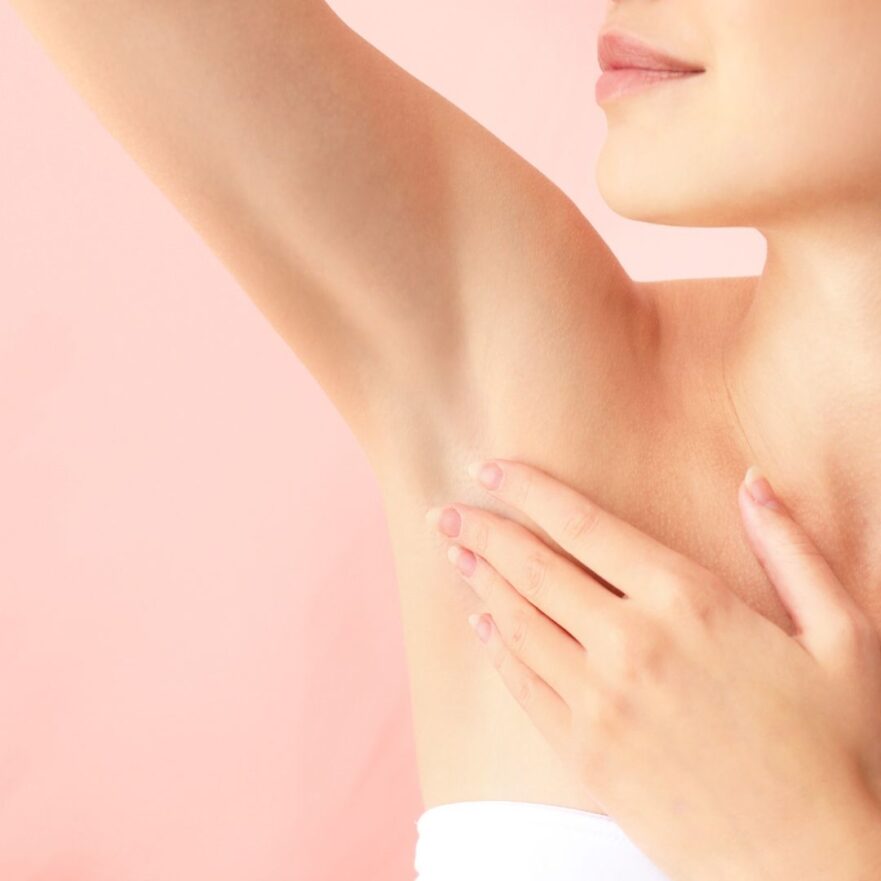
With skin temperature going up, our sweat glands will increase their perspiration rate. And this applies not just to our ‘normal’ sweat glands, but also special types of gland called ‘apocrine sweat glands’. They secrete pheromones in sexual arousal and are located in our skin around the nipples, in armpits and genito-anal area. But not only our sweat glands work harder during sex, the skin’s oil glands also tend to produce more skin nourishing oils.
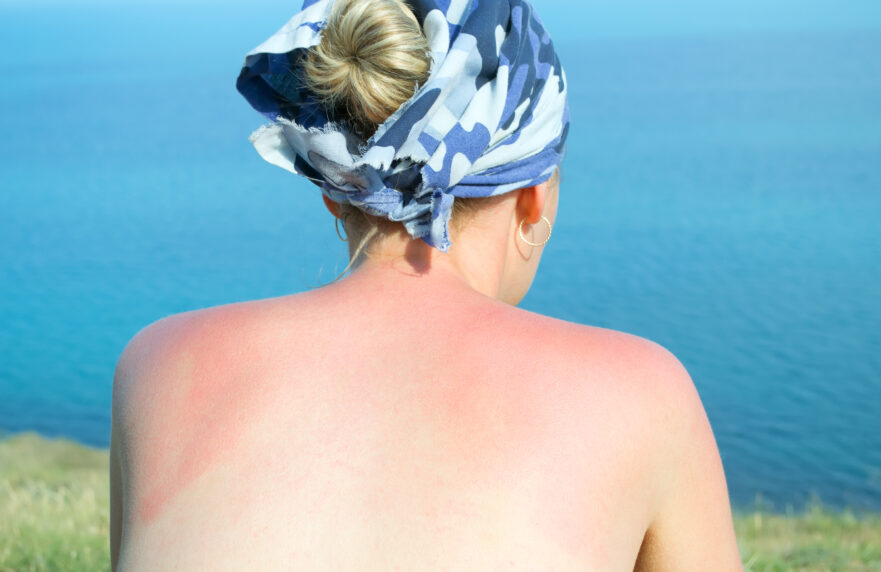
About half of all women or even more may develop a peculiar looking ‘sex rash’ (‘sex flush’) with sexual arousal or orgasm. This measles-like appearance with pink spots and patches on tummy, chest, face or even the entire body is caused by a temporarily increased blood flow in the skin and is nothing to worry about. It typically disappears minutes after orgasm, but in some cases may stay for an hour or two.
After orgasm, our muscles relax, blood pressure drops and the body slows down from its excited state. A study showed that women have lower stress and cortisol levels after an orgasm, which can only be good for our skin, as high cortisol is known to contribute to collagen degradation.
So, Lady Gaga was right then, in that orgasms lead to short-term benefits in our skin. But what’s going on in our skin in terms of long-term effects with regular orgasms? There isn’t much scientific research published, I am afraid. However, looking at the proven short-term benefits, regular orgasms can’t be a bad thing if you ask me …
The Girl with the Dragon Tattoo
With the American version of ‘The Girl with the Dragon Tattoo’ movie hitting our cinemas, tattoos might become even more popular than they are already. However, it is not uncommon for women to get a tattoo thinking this is the best thing ever, but then regretting it later. Maybe even assuming that if they don’t like it any longer in the future, they could always have it lasered away. Well, let me tell you, tattoo removal is not an easy option, even with the most advanced lasers. Apart from the fact that any laser treatment is rather expensive, there are often many treatment sessions needed to gradually fade an unwanted tattoo. And sometimes, depending on the exact ink colour, the tattoo might not even go completely, but leave a shadow behind for good.
What is laser treatment anyway? ‘Laser’ is an acronym for ‘light amplification by the stimulated emission of radiation’. So lasers are sources of high intensity light with a single wavelength, i.e. monochromatic. The aim of laser treatment is to destroy a target structure (e.g. pigment) with heat, while ideally not harming any surrounding tissue, as thermal damage of surrounding tissue might result in scaring. That means that different types of lasers have to be used to treat different problems – there unfortunately isn’t one for all. If you want to treat a vascular birth mark such as a port wine stain for example, you need a laser wavelength, which is predominantly absorbed by haemoglobin in our blood vessels, while treating unwanted hair requires a laser wavelength, which is absorbed by the pigment in the hair. For tattoo removal on the other hand, the appropriate laser light will target the ink pigment used. The altered ink pigment is then removed from the skin by a certain type of scavenging cells called macrophages. The exact choice of laser for tattoo removal depends on the colour, depth and chemical nature of the tattoo ink. Yellow, orange and green ink colours are generally the most tricky to remove. And as with all laser treatments, textural skin changes and scars may occur if you are unlucky.
Now, how about this – why don’t you get temporary tattoo (say for a party or so), which lasts a few days to avoid regrets later? I have recently seen a temporary tattoo kit containing a variety of easy to apply tats in Boots and thought to myself that more people should use these instead of going straight for the ‘real stuff’. And the best thing about these zero commitment tattoos? Removal requires no lasers!
Simply the Best – it’s official !
After two gruelling months of public voting, expert panel evaluations and ‘mystery shoppers’ (or should I say ‘mystery patients’) testing our services to the core, the big day had come to find out who would take home the ‘gold medal’ in the Aesthetic Awards 2011/2012. It was a nerve wracking evening, but I am so excited to reveal that (dum-dum-duuum…) … we made it!!! Yes, we won the Gold Award for ‘Best clinic’ in our category. I would have never expected that we would win, looking at the other fine finalists, but am absolutely thrilled about the award.
Most importantly, I would like to thank all of you who have voted for us. It is such a great feeling to get some recognition for what we are trying to do on a daily basis and I feel truly thankful and privileged to have such amazing patients and clients, who make coming to work a pleasure every day (well, most days…).
What is the connection between ‘dandruff’ and red patches on your face?
Often in clinic, I get patients coming in complaining about red patches on their face, in particular around the nose and around the eyebrows. These might be mildly itchy on occasion, and the skin here might be flaky or scaly, but otherwise cause no major symptoms. After looking at their skin, they are often surprised why I go on asking about ‘dandruff’ on the scalp, especially as usually the answer is yes.
The reason is that there is a very common skin condition called seborrhoeic dermatitis (also known as seborrhoeic eczema), which often affects the face with scaly, salmon-red patches, in particular around the creases of the nose and around the eyebrows, but also affects the scalp with bran-like scaling and sometimes itchiness. In addition to this, it can also affect body areas such as the middle of the chest and/or skin folds such as the armpits.
Seborrhoeic dermatitis is a very common skin condition that tends to come and go. The condition can appear at any age after puberty, but tends to flare in periods of stress, general ill-health and in immune-deficient patients. It is caused by an inflammatory reaction to an overgrowth of a yeast-like fungus called Malassezia. Malassezia is a normal part of our skin flora, but patients with seborrhoeic dermatitis seem to be more sensitive to a skin irritating substance this fungus produces.
The good news is that the condition is harmless and non-contagious. However, it is a chronic skin disease, which is unfortunately likely to persist, in varying degrees of severity. It can be kept under control well though with regular use of antifungal creams and shampoos (aimed to reduce Malassezia growth) and intermittent use of anti-inflammatory creams (aimed to reduce the inflammatory skin reaction) on an as needed basis. The skin should be cleansed with a non-soap cleanser such as Cetaphil cleanser.
We made it into the Final – and need you help!
I can’t describe how thrilled we were to find out that we made it into the Final of the Aesthetic Awards 2011. The announcement of reaching the Final came completely out of the blue for us, as we did not even know that we had been nominated. And even better – we made it into the Final in not just one category, but two: ‘Best small clinic’ as well as ‘Speaker of the Year’!
This is really amazing, as there were more than 4500 nominations, as I have since learned. In the ‘Best small clinic’ category, we are listed in the top 8 of the country and the best in London! In the ‘Speaker of the Year’ category, I am short-listed in the top 5, among high calibre speakers such as Dr Tim Flynn from the US. I feel very honored to have made it this far and would really like to thank whoever has nominated us and rooted for us!
But – now I need your help! Every one of you can now vote for the winner and I would be extremely grateful, if you would cast a vote via this link:
http://bit.ly/nWqOz6
It only takes about 30 seconds to vote and there isn’t much time left – so please do it now. Thank you ever so much – I will keep my fingers crossed! Stefanie
Living for 1000 years – apparently not so unlikely
I just watched a highly entertaining talk by the brilliant Aubrey De Grey on the possibility of significantly extending human lifespan (we are talking about hundreds of years!) and that this is actually not an unlikely concept even in people of our generation. This is of course an extremely fascinating theory and what is reassuring is that Aubrey is actually an acclaimed anti-ageing researcher and scientist at Cambridge University.
What he says is basically that in the future we will be able to gradually extend our life span more and more and eventually even be able to turn back the clock, rather than simply stopping it. The key is that the gradual extension of life span is not a linear development, but is in fact exponential. So the rather slow appearing increase of human life span at the moment (of one to two years per decade), will in fact speed up significantly in the future, as rejuvenation medicine technologies evolve and the rate of improvements increase. He calls his theory “longevity escape velocity”. And this speeding up of development might in fact happen to such an extent that he thinks that the first 1000-year-old human being will only be around 10 years younger than the first 150-year-old human being.
But lets talk first about why we age in the first place. Well, as he wittily puts it, ageing is “a side effect of being alive” and that is very true, as cell ageing is a consequence of cell metabolism. Our cells’ metabolism causes ongoing damage by mechanisms such as DNA damage, protein cross-links, mitochondrial damage etc. etc. That is also the case for our skin cells by the way.
So until those fundamental breakthroughs in technology which will allow us to delay the ageing process “beyond our warranty period” and postpone the onset of age related illnesses, have evolved far enough, we simply have to live as ‘good’ a life as possible I suppose – experts in rejuvenation medicine believe that only around 10% of ageing is down to our genes, and 90% is down to lifestyle. This again is matched by observations in Dermatology, as we know that the visible signs of skin ageing are up to 90% down to sun exposure and other environmental factors such as smoking, but only around 10% down to our genes.
http://www.ted.com/talks/aubrey_de_grey_says_we_can_avoid_aging.html
Hyper- what??
When traveling in the tube in London in rush hour in summer, I sometimes can’t help wishing more people knew about effective treatments for hyperhidrosis. Hyperhidrosis is a term describing an excessive production of sweat in the skin’s sweat glands. The most common type is a localised, symmetric form, affecting for example the palms, soles and/or armpits. There are millions suffering with this problem worldwide. While there are some cases of excessive sweating caused by an underlying problem such as an over-function of the thyroid gland, most cases don’t suffer with any underlying condition and the cause remains unknown – we call this ‘primary hyperhidrosis’.
Hyperhidrosis can have a detrimental effect on a suffer’s social life and drastically decrease his quality of life. So if you suffer with excessive sweating without any underlying problem, what kinds of non-surgical treatments are there to improve the sweating? The first, simplest step might be to try an antiperspirant solution or powder containing aluminum chloride, which is available in any local chemist. Over time aluminum chloride reduces sweat production in sweat glands. It should be applied regularly once or if tolerated twice per day on dry skin. However, in some people it can lead to skin irritation.
In addition, there are also certain prescription drugs that can be tried such as propantheline tablets, glycopyrrolate tablets or topical glycopyrrolate solution. Another type of treatment, which is usually very well tolerated and works particularly well for hands and/or feet is iontophoresis. Iontophoresis is a method of passing a tiny electic current (don’t worry, it does not hurt, only tingles a bit) trough the skin while your hands and/or feet are soaking in water (or glycopyrrolate solution). I have seen great results in patients on iontophoresis and a home device can be bought for a few hundred pounds. Although there are pads available for treating the armpits, in my experience this area does not respond as well to iontophoresis as the hands and feet.
However, for the armpits there is another treatment method available, which I have to say is my favorite treatment for hyperhidrosis, as it achieves truly amazing results. This treatment involves injecting botulinum toxin (one brand name is ‘Botox’), which blocks the nerves that activate sweat glands in the skin. After application of numbing cream (so that you won’t feel the injections), very small amounts of the botulinum toxin solution are administered into the affected skin area. The sweat blocking effect is quite astonishing and the best thing is that it lasts about six to nine months, before the treatment has to be repeated. And for me as a doctor it is really wonderful to hear about the change in quality of life in patients after treatment.
Revolutionizing facials for breakout prone skin
In my clinic I see many patients with acne or rosacea and it is truly heart breaking to see how much the state of their skin can influence their confidence, mental well-being and quality of life. Once I have worked with them and their skin has begun to clear, it is equally touching to see how much peoples’ lives change once their skin looks healthy and beautiful again. Over the course of a treatment I have seen patients gradually smile more, start to carry themselves in a more happy and confident way and even dress differently, a very rewarding part of my job.
One thing that most breakout prone patients miss out on is the opportunity to go for regular facials, which the majority of women do without a thought. Imagine the amazing experience of feeling deeply relaxed and pampered, while knowing that you are giving your skin a great treat at the same time. Forgetting about your daily stresses, recharging your battery and simply ‘floating’ for an hour or so – sounds great doesn’t it? Well, unfortunately for people suffering with breakouts this isn’t as straight forward. Many of you will have had the experience that your high street facial didn’t actually have the promised benefits on your skin – or even worse: aggravated your skin problem! This is a very, very common problem for acne and rosacea sufferers – the reason being that most high street beauty therapists are not well trained enough to deal with problem skin, and have not had the advantage of working closely with a dermatologist. Their facials are therefore often completely unsuitable for problem skin. I have seen spas marketing so-called ‘acne facials’, which when looking into it, turned out not to be suitable for breakout prone skin at all. Chances are you might end up with worse skin than before.
And that’s the reason why we are so proud to offer our very special, Dermatologist developed acne and rosacea facials for men and women with breakout prone skin. Not only will they give you an amazingly relaxing experience (an hour of pure ‘me time’) and help to keep your skin beautiful and young looking, but our specialist facials are also highly effective in helping to improve acne and rosacea. Our mission is to revolutionize facials – this is very different from what you typically find on the high street. We set out to allow people with problem skin to be able to enjoy a new type of facial – Relax in the knowledge that you are in trusted hands, with the added peace of mind that should you need additional help to turn your skin around, there is a Dermatologist at hand to help with prescription treatments where needed.
Why I don’t believe in miracles
There’s no doubt in my mind that using a good skincare regime with effective cosmeceuticals benefits skin immensely. The problem is, the timescale needed to reap real benefits isn’t always reflected by the manufacturer’s claims, or the media’s enthusiasm, come to that. There are too many ‘miracle’ creams on the market promising dramatic, visible skin improvements after a mere two to four weeks – or even immediately. But in the real world, can we believe them? Let’s have a closer look at those claims.
Anti-ageing creams invariably promise both instant and long term results. What you should notice immediately after application is improved hydration – your skin looks fresher and feels softer, more moist and comfortably elastic. But does looking and feeling better mean your skin has physically changed for the better? Sadly, it’s not that simple.
What I expect from an anti-ageing cosmeceutical formula goes beyond pure hydration. While it’s helping to protect my skin from environmental damage, I’d like to know it’s boosting production of good quality, wrinkle-preventing proteins including collagen and elastin. In other words, I want actual changes in my skin’s biology. And I realise this won’t happen overnight.
Let’s get real, girls – and boys, too! I’m talking months to years, rather than days to weeks. Embarking on a good cosmeceutical skincare regime is like joining a gym. You wouldn’t expect major miracles after only a couple of weeks’ exercise, would you? Remember that in your 20s nature more or less determines how your skin looks – but past 30, it’s down to you! A good skincare regime is a serious investment in your skin’s future – like a fund you keep paying into to enjoy the benefits on maturity. Bear in mind that these benefits might not show in exactly the way you expected. You’re not likely to look in the mirror one day and think ‘Wow! I look 10 years younger than last week!’ Instead, it’s my experience that after your 35th or 40th birthday you’ll suddenly begin to realise you’re looking so much younger than friends who haven’t taken their skincare seriously. So don’t trust overnight miracles. It’s long-term investment that pays off in the end.
‘Botox’ – correction or prevention?
Most people see botulinum toxin (often incorrectly referred to as ‘Botox’ following one of the brand names) as something for correcting significant lines and wrinkles once they are older. In clinic I often hear sentences like “When I am 50 or 60 years old, I might go for ‘botox’, but at the moment I am way too young”. Botulinum toxin is often seen as a kind of ‘last resort’ or ‘extreme measure’ to consider only once significant signs of skin ageing such as deep lines and wrinkles have already appeared. This is a misconception.
To understand why, let me give you an important piece of background information on lines and wrinkles. When we first develop lines, these are usually ‘dynamic’ lines. Dynamic lines (or ‘mimic’ lines) are caused by contraction of facial muscles. They include ‘frown lines’ between the eyebrows, ‘worry lines’ on the forehead, ‘bunny lines’ on the nose and ‘crow’s feet’ at the outer eye corners. They are visible when we contract certain muscles (for example when frowning or smiling), but smooth out when we relax our face. However, once we have had these dynamic lines for a while, they become partly independent of muscular movement and stay visible to some extent all the time. These are then so-called secondary ‘static’ lines.
Now, what most people don’t know is that botulinum toxin works best with purely dynamic lines in people with well preserved skin elasticity. Once our lines have partly turned static and once our skin elasticity declines, botulinum toxin alone will not do the trick any longer and we would need additional procedures such as fillers and volumisers. So for botulinum toxin to work best it is good to start early enough, when your lines are still dynamic and your skin elasticity is still high. And in this case, botulinum toxin not only beautifully corrects your lines and wrinkles, but also prevents dynamic lines from becoming static. As cosmetic dermatologists, we have known this for a long time.
However, when I visited the World Congress of Anti-Ageing Medicine in Monte Carlo last month I learned that it goes much further even. Not only does botulinum toxin prevent dynamic lines from turning into static lines, it also seems to preserve skin elasticity itself. Why this is the case, we don’t know for sure yet. Might it be that countless creasing of the skin (caused by our facial muscle contractions) has a negative effect on collagen metabolism itself? I am looking forward to further scientific studies to find out what exactly causes this benefit, but it certainly seems to work, not only in the upper face, but also the lower face.
I can thus answer my initial question with: Botulinum toxin not only corrects lines and wrinkles, but also has a great role in prevention. These are truly exciting times in cosmetic medicine not only for patients, but also for us as practitioners.